
Hi-Capa Trigger Upgrade Guide – Everything You Need to Know
A bad trigger on a Hi-Capa stands out straight away. Too much creep, a vague break or a sluggish reset can make the pistol feel inconsistent, especially if you're shooting fast. A good trigger should feel crisp, predictable and reset positively every single time.
One thing that's worth clearing up from the start is that a trigger upgrade isn't just changing the trigger itself.
A lot of people fit a new trigger expecting the pistol to suddenly feel amazing, but that's only one piece of the puzzle. The trigger feel on a Hi-Capa comes from the trigger bow, sear spring, disconnector, sear, hammer, grip fitment and even the tolerances of the frame. That's why two Hi-Capas fitted with exactly the same trigger can feel completely different.
If you're chasing the perfect trigger, you need to think about the whole system rather than just one part.
What Does a Hi-Capa Trigger Upgrade Actually Do?
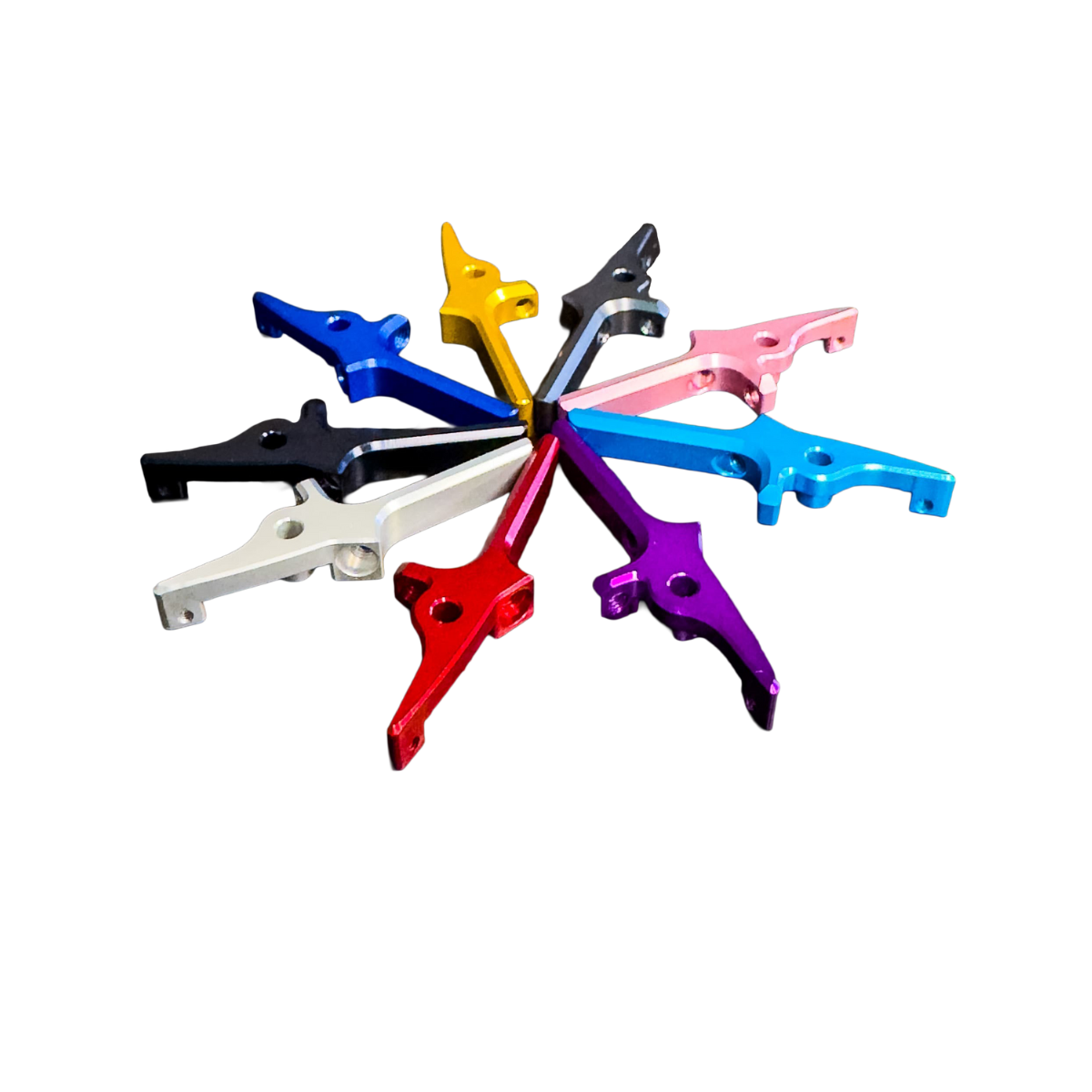
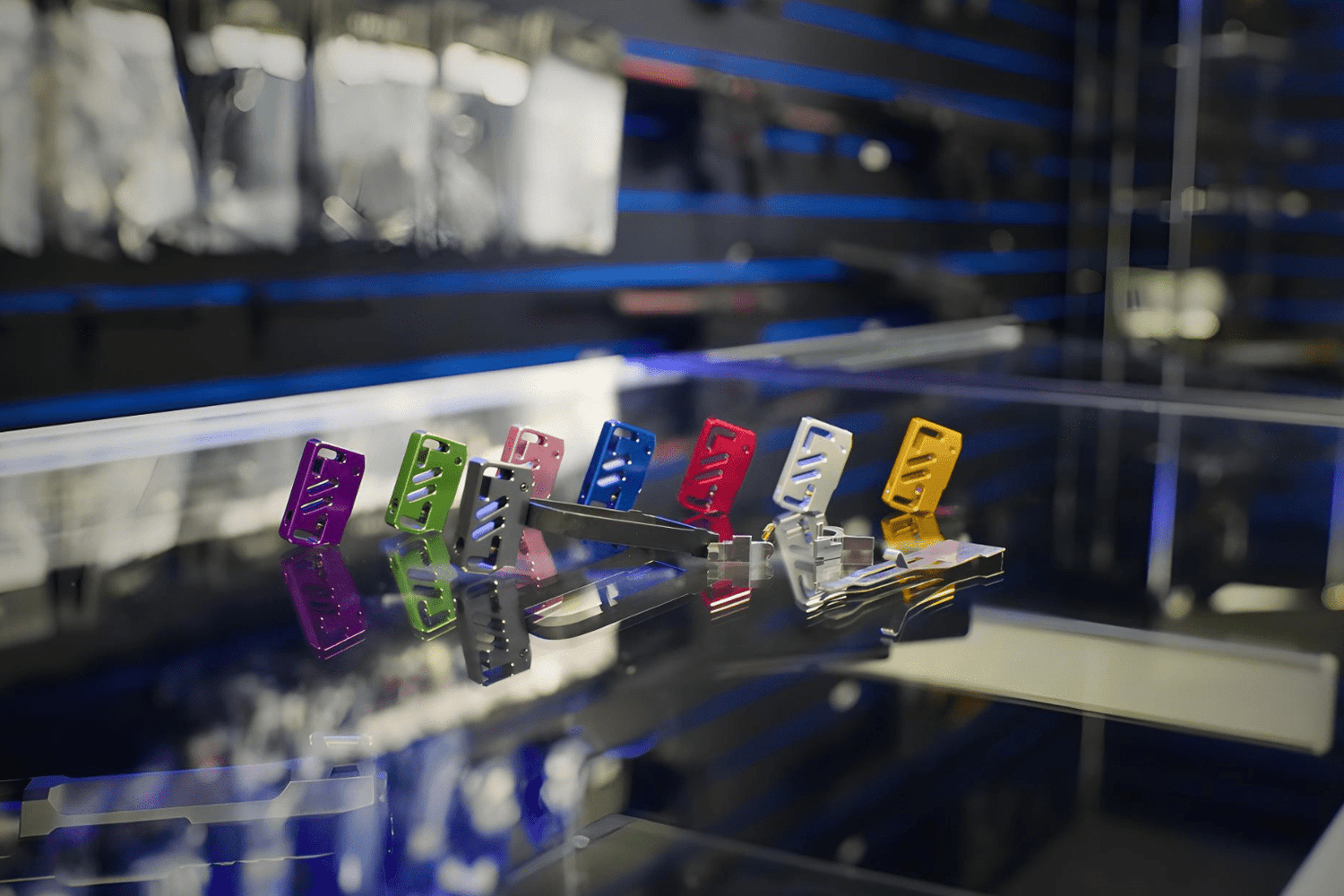
Most players start with an adjustable trigger from brands like Airsoft Masterpiece, Dr.Black or Nexxspeed.
These give you the ability to adjust over-travel (grub screw at the bottom of the trigger), change the trigger shape and improve the overall feel of the pistol. Flat triggers are especially popular as they give a consistent finger position and suit quick, straight-back pulls.
But it's important to remember that the trigger doesn't create the break.
What actually makes a trigger feel crisp is how smoothly the trigger bow moves through the frame, how well the sear spring is tuned and how the hammer and sear interact with each other.
If any of those parts aren't working properly, even the most expensive trigger won't feel right.
Decide What You're Trying to Fix
Before buying parts, ask yourself what's actually wrong with your current trigger.
If there's loads of slack before the break, you're looking at pre-travel and over-travel adjustment.
If the trigger feels gritty, it's usually friction somewhere in the trigger bow, frame or grip.
If the break feels mushy or inconsistent, the problem is often with the sear, hammer or spring setup rather than the trigger itself.
This is where a lot of builds go wrong.
People throw lots of premium parts into a pistol because they're highly rated, only to end up with a trigger that's less reliable than the original. Mixing aftermarket parts can absolutely improve a Hi-Capa, but every part needs to work together.
The Parts That Actually Affect Trigger Feel
Trigger & Trigger Bow
This is where most upgrades begin.
A quality adjustable trigger lets you remove unnecessary movement after the break, making the pistol feel much more responsive as you're not pulling past the point you need to, making follow up shots better.
Flat triggers have become the go-to option for speedsoft and competition builds, while curved triggers tend to suit players who prefer a more traditional feel.
Trigger bows can make a huge difference to how your Hi-Capa feels. Airsoft Masterpiece trigger bows feature an adjustment tab at the front, allowing you to fine-tune where the trigger breaks. This removes unnecessary slack from the trigger pull, giving you a much cleaner and more responsive trigger.
Dr.Black takes a different approach to achieve the same result. Their trigger bows feature a raised section at the rear, allowing the disconnector to sit slightly higher. This reduces the amount of movement needed for the disconnector to engage the sear, helping to remove unnecessary trigger travel and giving the trigger a quicker, more responsive feel.

Sear Spring
This is one of the most overlooked parts in the entire pistol.
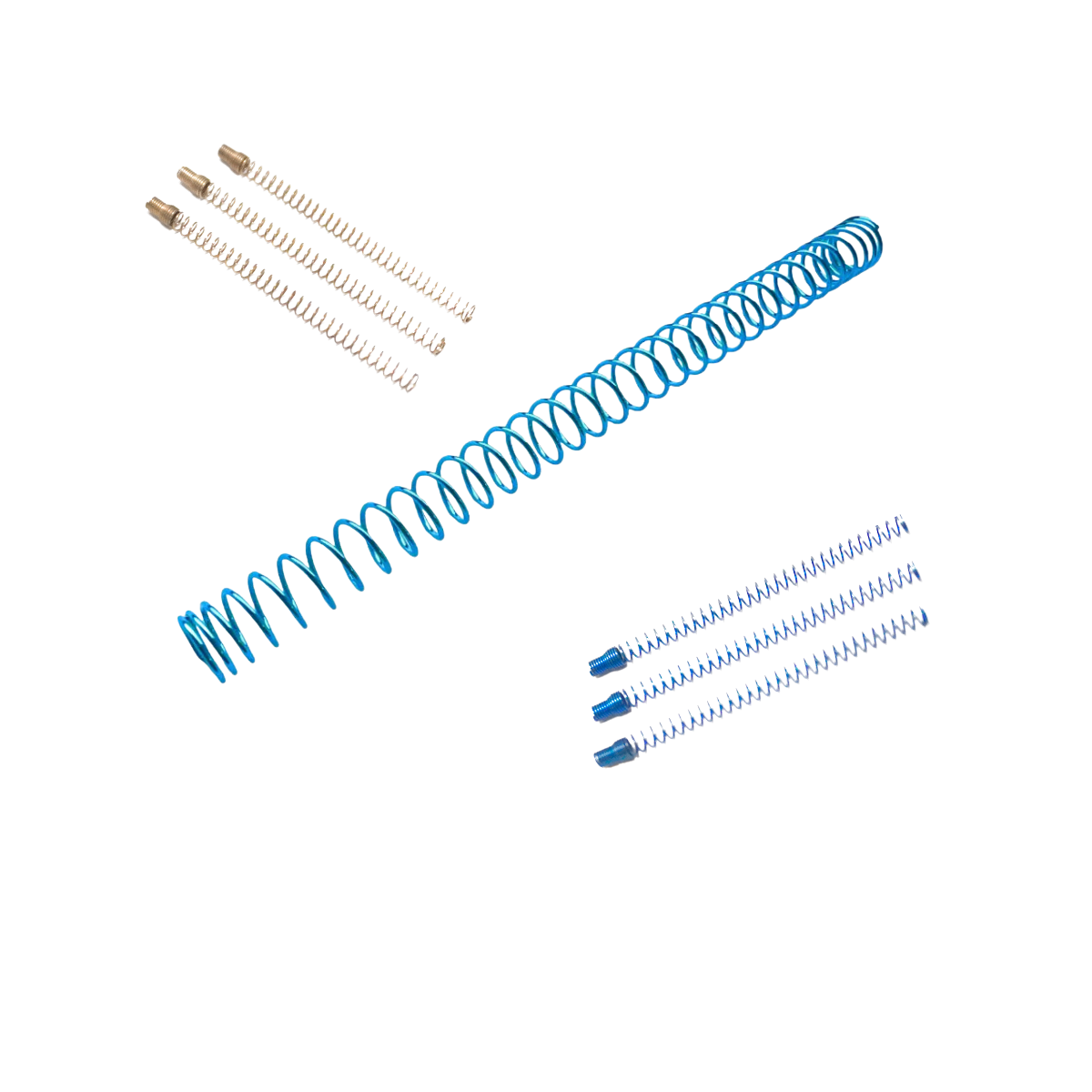
The three fingers on the leaf spring control the sear, disconnector and grip safety. Tiny adjustments here can completely change the trigger weight, reset and overall feel.
Too much tension makes the trigger feel heavy.
Too little tension and you'll start getting weak resets or unreliable engagement.
The best one today is the Cowcow Trident, usually very well tuned out the pack but still can be easily manipulated for extra tuning.
Hammer & Sear
The relationship between these two parts is what creates the trigger break.
A matched hammer and sear set can make a noticeable difference, but this isn't somewhere you want to guess or start removing material.
Trying to create the lightest trigger possible can quickly lead to hammer problems or unreliable operation if you reduce the engagement too far. There's a very fine line between a perfectly tuned trigger and one that's unreliable. It's also worth remembering that parts wear over time, so leaving yourself a small safety margin will help keep the trigger consistent and reliable in the long run.
Disconnector
If the reset feels inconsistent, don't overlook the disconnector.
A worn, rough or out-of-spec disconnector can make the reset feel inconsistent, even if the rest of the trigger setup is spot on. The stock Tokyo Marui disconnector is perfectly usable, but you'll often notice casting marks and surface imperfections. CNC steel disconnectors from Airsoft Masterpiece and Dr.Black are finished to a much higher standard, giving smoother operation and a more consistent trigger reset.
It's often worth checking before replacing it.
Fitment Matters More Than Brand Names
One of the biggest misconceptions is that expensive aftermarket parts simply drop straight in.
Sometimes they do. Quite often they don't.
Frames vary slightly. Grips vary. Trigger bows sit differently depending on the combination of parts you're using. Always check how the trigger moves within the grip with nothing else fitted, it should travel smoothly without scraping or sticking anywhere. The best test, is to tilt the grip backwards, it should just drop out.
If it doesn't, don't immediately reach for a file. Find where it's binding first.
Sometimes it's the trigger track, sometimes it's the bow, Sometimes it's simply the grip screws causing the issue.

Don't Over-Adjust Your Trigger
Adjustable triggers are brilliant when they're set correctly, they're also one of the easiest parts to adjust too far.
Remove too much over-travel and the sear may not release consistently.
Start with small adjustments and work your way towards the feel you want, rather than trying to remove every last bit of movement. Always make your final adjustments with the slide on the pistol. The blowback unit (BBU) puts pressure on the disconnector, so a trigger that's perfectly adjusted with the slide off will usually end up over-tuned once it's reassembled. Taking the extra few minutes to tune it with the slide fitted will save you a lot of headaches later on.
How to Improve Trigger Feel Without Losing Reliability
The best trigger jobs usually come from lots of small improvements rather than one huge change.
Make sure the trigger moves freely, set your travel correctly, tune the sear spring carefully, get a Cowcow trident as great benchmark to start with.
Then test everything thoroughly and always leave yourself a safety margin due to wear.
A trigger that feels fantastic during a few dry fires but starts acting up halfway through a game isn't a good trigger.
Reliability always comes first.
Common Mistakes
One of the biggest misconceptions is that a trigger alone will completely transform how your Hi-Capa feels. If you're upgrading for aesthetics or to gain adjustable over-travel, then it absolutely works as a standalone upgrade. But if you're chasing a lighter, crisper trigger break, you'll need to look at the rest of the trigger system too. The trigger is only one piece of the puzzle.
If your leaf spring isn't set correctly or your hammer and sear aren't working together properly, changing the trigger won't magically fix it.
Another common mistake is chasing the lightest trigger possible, most players actually shoot better with a trigger that has a clean wall, positive reset and consistent break than one that's ultra-light but unpredictable.
Finally, don't replace everything at once, upgrade one area at a time.
If something changes for the worse, you'll know exactly which part caused it.
Is a Trigger Upgrade Worth It?
If you're using your Hi-Capa as a primary, play speedsoft, CQB or simply want a pistol that feels faster and more consistent, then yes.
A properly fitted trigger setup makes a noticeable difference to how the pistol feels to shoot.
If you're mainly looking for more range, accuracy or gas efficiency, though, your money may be better spent elsewhere first.
A good hop setup, quality bucking, nozzle upgrades or recoil tuning often give bigger performance gains than a trigger upgrade alone.
Final Thoughts
A trigger upgrade isn't about buying the most expensive trigger you can find.
It's about building a Hi-Capa that feels smooth, breaks cleanly and resets positively every single shot.
Take your time, fit the parts properly and think of the trigger as a complete system rather than one individual component.
Do that, and you'll end up with a Hi-Capa that not only feels better on the bench but performs better when it actually matters on the field.

Leave a comment
All comments are moderated before being published.
This site is protected by hCaptcha and the hCaptcha Privacy Policy and Terms of Service apply.