
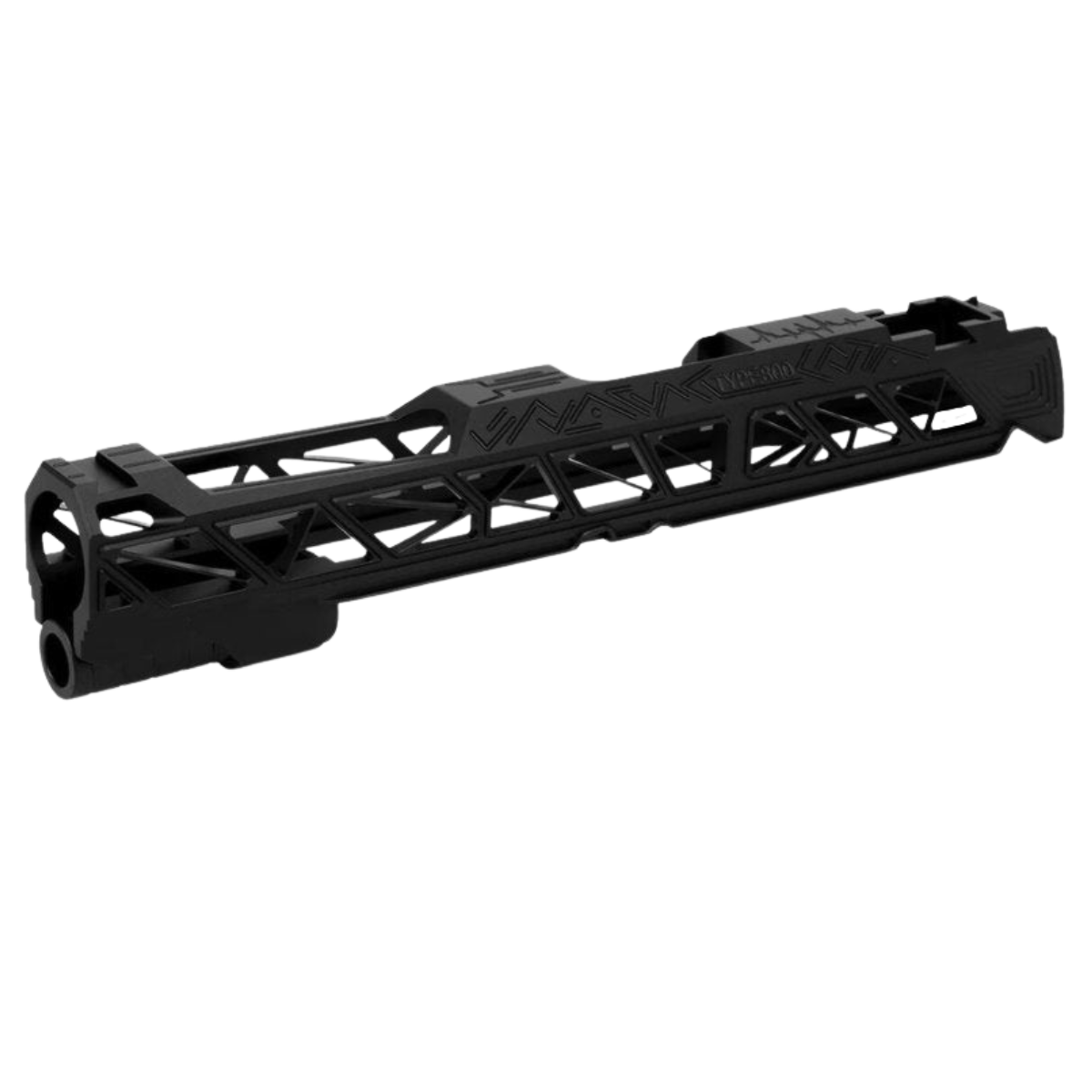
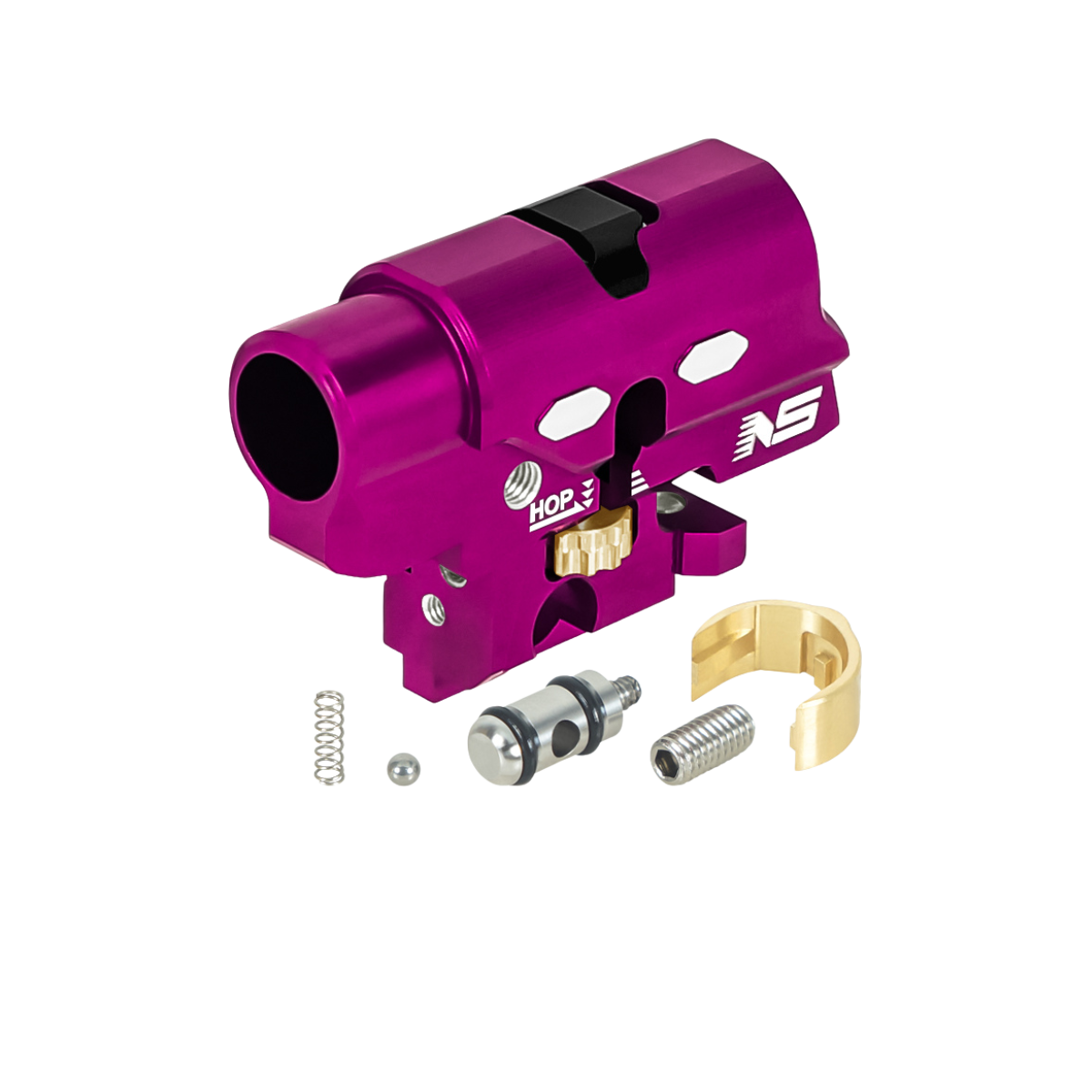
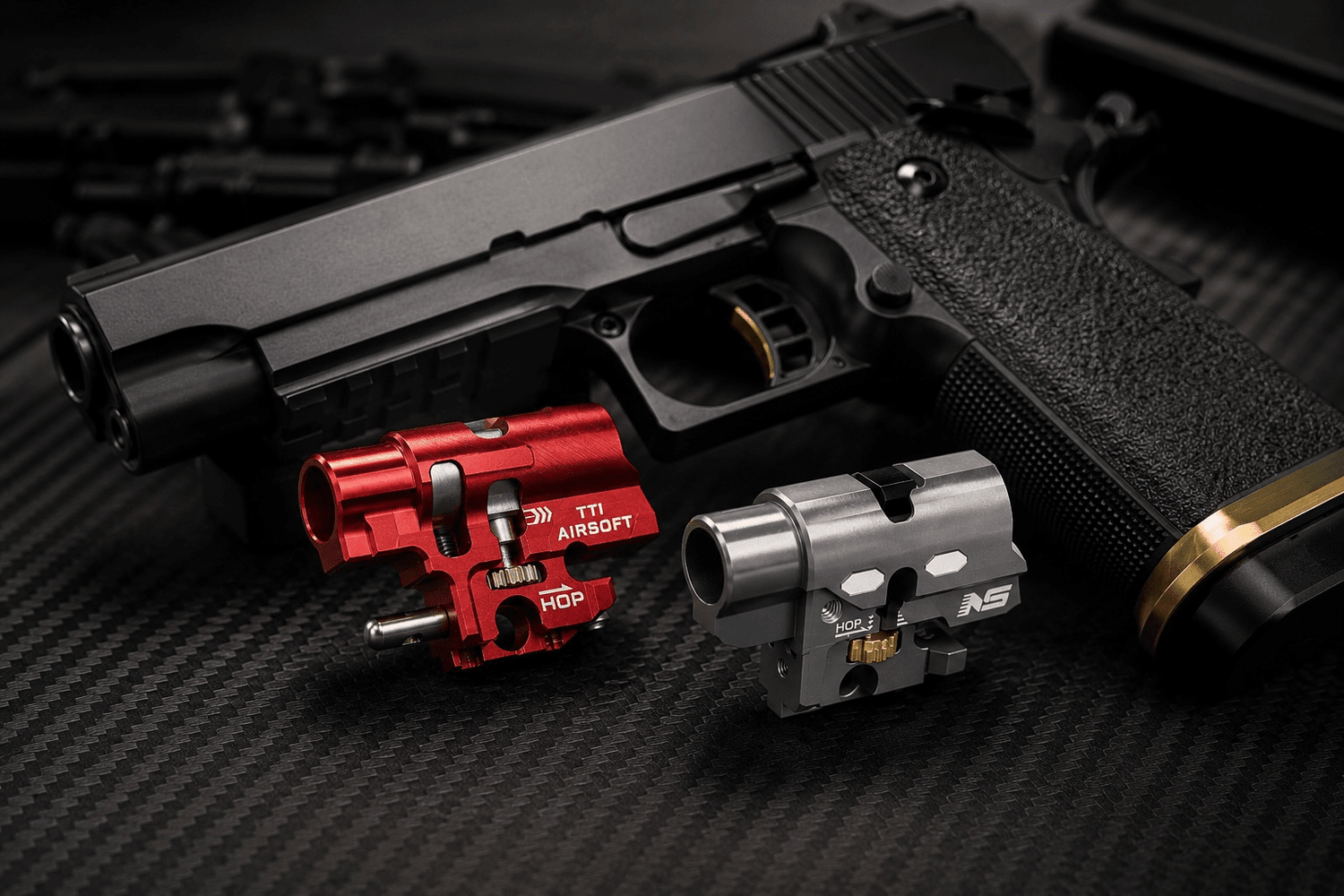
If your Hi-Capa is grouping well one mag, then sending rounds left or high the next, the hop unit is usually where the conversation starts. Finding the best hi-capa hop unit is less about chasing the most expensive part and more about matching chamber design, barrel fit, bucking choice and your actual use case.
That matters because thehop unit sits right at the centre of accuracy tuning. On a pistol platform, especially one built for fast CQB shooting, small changes in pressure, alignment and consistency show up immediately downrange. A flashy slide or lightweightblowback unit can change the feel of the gun, but a properly chosen hop unit changes how it performs.
What makes a Hi-Capa hop unit actually good?
A good hop unit does three jobs properly. It holds the inner barrel securely, applies even pressure through the bucking, and stays consistent under recoil and repeated cycling. If it cannot do all three, you end up chasing faults elsewhere in the build.
Material is part of it, but not the whole story. CNC aluminium units are popular because they are rigid, well finished and generally better controlled dimensionally than cheap cast parts. That said, a beautifully machined chamber that fits badly with your nozzle, outer barrel or bucking is still a bad upgrade. Tolerance stacking is real on Hi-Capas, especially once you move away from a mostly stock Tokyo Marui setup.
The best units also give you stable adjustment. If the hop arm applies pressure unevenly, or if the adjustment wheel drifts, your BB flight path will never stay consistent for long. That is why experienced builders tend to focus on chamber geometry and compatibility before branding.

The best hi-capa hop unit depends on the build
There is no single answer that suits every pistol. A skirmish primary for indoor sites has different priorities from a carefully tuned outdoor pistol build shooting heavier BBs. The best hi-capa hop unit for a compact, aggressively short-stroked speedsoft setup may not be the one you would choose for maximum range and shot-to-shot stability.
If you run a mostly stock Tokyo Marui platform and want a dependable accuracy upgrade, you are usually looking for a chamber that keeps excellent air seal and works cleanly with common aftermarket buckings and barrels. In that case, the safer option is often a proven unit with broad parts compatibility rather than the most exotic design on the shelf.
If your pistol is heavily upgraded, the calculation changes. Lightweight slides, custom outer barrels, advanced nozzle setups and tight aftermarket tolerances can all affect how the chamber sits and how the nozzle interfaces with the bucking lips. In those builds, the best choice is often the one that gives the most predictable fit with the rest of your parts, even if another chamber looks better on paper.
Fit matters more than marketing
This is where many builds go wrong. Players swap in a new hop unit expecting a straight accuracy gain, then end up with feeding issues, inconsistent FPS or a barrel that does not sit correctly. The chamber is not an isolated upgrade. It has to work with your inner barrel window, bucking mound shape, nozzle length, outer barrel lock-up and slide cycle.
A slightly different chamber tolerance can alter nozzle-to-bucking con
tact enough tocreate poor seal or erratic feeding. Likewise, a barrel that sits with even a touch of movement can throw off consistency. What looks like a hop issue may actually be movement between the chamber and outer barrel.
For that reason, experienced Hi-Capa builders tend to choose parts ecosystems rather than individual upgrades in isolation. If a hop unit has a strong track record with the barrel and bucking combination you already trust, that matters far more than a brand claiming tighter tolerances.

Barrel and bucking choice will decide the result
No hop chamber performs at its best with the wrong rubber or a poorly matched barrel window. If you are trying to decide on the best hi-capa hop unit, think of it as one part of a tuning package.
A softer bucking can work well for lower power builds and indoor engagement distances, but it may become less stable if you are trying to lift heavier BBs. A firmer bucking can improve consistency with heavier ammo, though it may need more careful setup and enough gas efficiency to keep the system stable. Then there is the nub and arm geometry. Even a good chamber can underperform if the pressure patch is uneven.
Barrel choice matters just as much. A quality inner barrel with a clean, properly cut window gives the bucking a better chance to apply consistent hop. Pair a solid barrel with a chamber that centres it properly, and you usually see more benefit than from changing the chamber alone.
Common signs your hop unit is the weak point
You do not always need to replace the hop chamber. Sometimes the issue is the bucking, the arm, poor installation or a worn nozzle. But there are a few patterns that point strongly towards the unit itself.
If hop adjustment feels vague or moves too easily, the chamber may not be holding its setting properly. If your BBs curve inconsistently despite using good ammo and a known good bucking, chamber alignment is worth checking. If feeding becomes unreliable only after fitting a new chamber, that is usually a compatibility problem rather than bad luck.
Likewise, if your pistol shoots well for a handful of shots and then starts wandering, barrel stability inside the chamber and outer barrel assembly should be examined. A hop unit that allows play in the wrong places can ruin an otherwise expensive build.
Should you upgrade from stock?
On a standard Tokyo Marui Hi-Capa, the stock chamber is not automatically bad. In fact, for many players, it is better than replacing it too early with an aftermarket unit that has not been tested against the rest of the build. If your pistol is feeding well and giving acceptable accuracy, a bucking and barrel upgrade may offer a cleaner gain first.
Where aftermarket hop units make more sense is when you are pushing the platform harder. Heavier BBs, tighter accuracy expectations, custom slides and barrels, and fully tuned competition builds all increase the value of a more stable and better-machined chamber. The gain is not just accuracy. It is repeatability.
That is the real reason serious builders upgrade. Not because the stock part cannot work, but because they want a chamber that holds the setup more consistently once every other component has also been refined.
Price versus performance
The cheapest option rarely makes sense on a performance Hi-Capa. A poor chamber can waste money elsewhere by creating problems you then try to fix with more parts. Equally, the most expensive unit is not guaranteed to be the best hi-capa hop unit for your setup.
Value comes from how much friction it removes from the build. If a chamber installs cleanly, maintains stable hop, works with your chosen barrel and bucking, and does not create feeding drama, that is good value. If it needs endless fitting or only works with a narrow parts combination, it is a niche choice at best.
For most serious players, proven compatibility is worth paying for. So is stock availability from a specialist retailer that actually understands platform-specific fitment. Waiting weeks for an imported part that may or may not play nicely with your build is rarely a clever route when your pistol is a skirmish tool, not a shelf piece.
How to choose the right one for your pistol
Start with your goal, not the product page. If you want a dependable skirmish build, prioritise compatibility and consistency. If you are building a competition pistol with a very specific recoil and cycling profile, you can be more selective about chamber design and fitment.
Then look at the rest of your setup honestly. Which slide are you using? Is the outer barrel standard or aftermarket? What nozzle setup is in the gun? Which bucking and barrel are you pairing with the chamber? Most hop problems come from combinations, not single parts.
It also helps to buy from a retailer that specialises in Hi-Capa platforms rather than general airsoft stock. Hi-Capa Hub, for example, sits squarely in the niche where buyers already know the difference between a cosmetic part and a real performance upgrade. That matters when you want the right chamber the first time rather than another experiment.
The right answer is the one that stays consistent
The best hop unit is not the one with the loudest reputation. It is the one that feeds cleanly, applies hop evenly, holds its setting and works with the rest of your build without drama. In a Hi-Capa, consistency is performance.
If you are upgrading, treat the chamber as part of a system. Match it properly, install it carefully, and judge it by results on target rather than hype. Get that right, and your pistol stops feeling merely upgraded and starts feeling properly sorted.

Leave a comment
All comments are moderated before being published.
This site is protected by hCaptcha and the hCaptcha Privacy Policy and Terms of Service apply.